



Low Expansion Brake Hose: What 0.25 ml/m Means for Brake Feel
Release Time:
Aug 12,2026
Most buyers spec brake hoses by burst pressure and ignore expansion. This guide explains what the 0.25 ml/m figure actually means for pedal feel, how low-expansion hoses achieve it, and the test report questions to ask your supplier.

Brake hose spec sheets are full of numbers, and buyers learn to read one of them: burst pressure. Expansion gets a glance at best. That is a mistake. Volumetric expansion controls how the brake pedal feels under your foot, and it is the number suppliers are most tempted to understate. This article explains what 0.25 ml/m actually means, how a hose achieves it, and what to check before you order.
What expansion is
When you press the brake pedal, the master cylinder pushes fluid through the hoses to the calipers. Under that pressure, a rubber hose wall swells slightly and absorbs some of the fluid volume. That absorbed volume is volumetric expansion, measured in milliliters per meter of hose (ml/m). The more the hose expands, the more pedal travel is lost before the caliper starts moving.
Burst pressure tells you when a hose fails. Expansion tells you how it behaves every time you brake. Two hoses can share the same burst rating and feel completely different on the road.
Reading the number
Expansion is always quoted at fixed test pressures, because it grows with pressure. The two common points are 6.9 MPa and 10.3 MPa, roughly the 1,000 psi and 1,500 psi levels used in the U.S. regulation.
Our low-expansion assembly measures 0.25 ml/m at 6.9 MPa and 0.36 ml/m at 10.3 MPa. Compare that with a standard assembly, which runs about 0.68 ml/m at 6.9 MPa and 0.79 ml/m at 10.3 MPa. The difference is not academic: at the same pressure, the low-expansion hose absorbs roughly a third of the volume the standard hose does. Less volume absorbed means less pedal travel, sharper response, and shorter stopping distances under hard braking.
How it is built
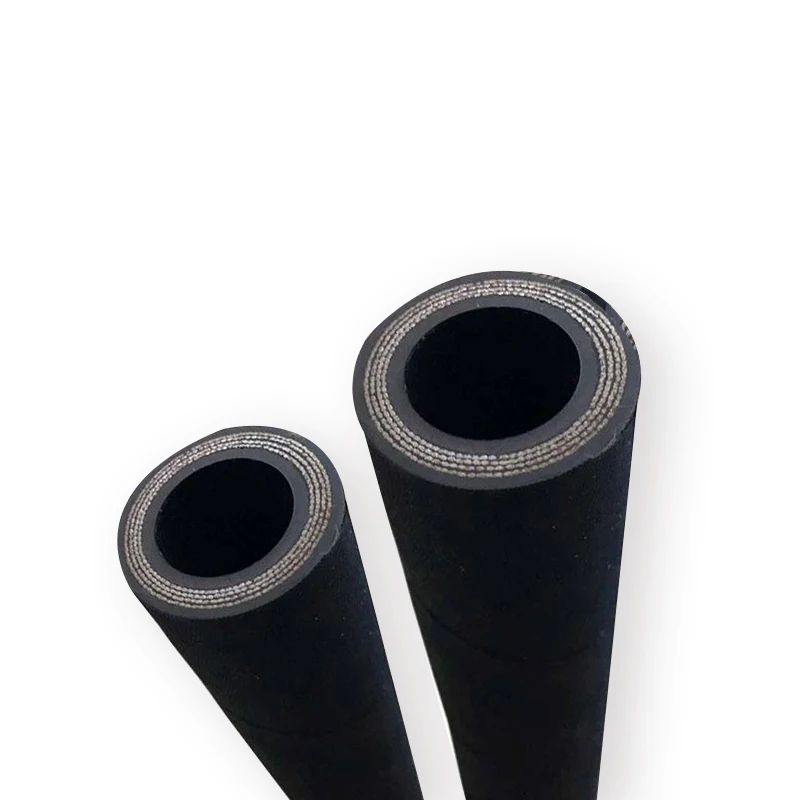
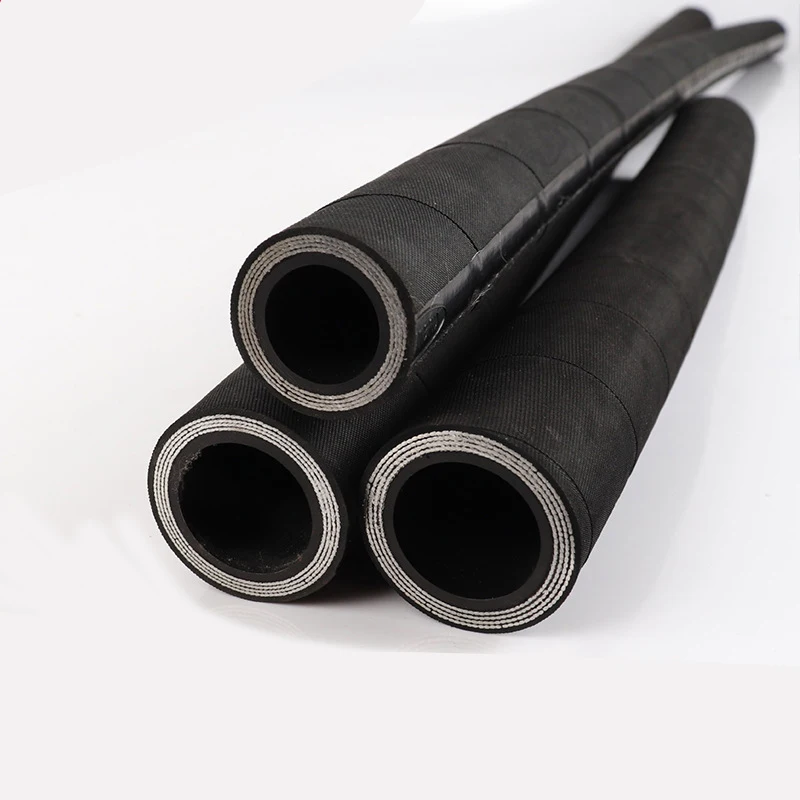
Low expansion is engineered, not claimed. The 3.2 mm inner tube is EPDM, chosen because it stays dimensionally stable in DOT3 and DOT4 fluid. Around it, a dual-layer high-tenacity synthetic fiber braid takes the pressure load so the rubber does not have to stretch. An ozone-resistant EPDM outer cover protects the structure from road debris, salt spray, and UV.
The assembly is pressure-tested to 80 MPa minimum burst, and every unit is tested before shipment. When a supplier quotes a low expansion number, ask what construction sits behind it. A thin wall with no reinforcement can pass a bench test and drift in production.
What to verify
Expansion is easy to understate, so verify it the same way you verify burst. Ask for the test report and check three things: the test pressure (expansion at 6.9 MPa and at 10.3 MPa, not just one point), the hose diameter the value refers to (larger bores expand more; a 4.8 mm hose should not be quoted using 3.2 mm data), and the batch number on the report matching your goods. If a supplier quotes a single expansion figure with no test pressure, treat it as marketing.
Before you order, ask your supplier:
- What is the volumetric expansion at 6.9 MPa and at 10.3 MPa, not just one pressure point?
- Which hose diameter does that expansion value refer to, mine or the smallest in the range?
- Can you share the expansion test report for my batch, with the batch number visible?
- What construction achieves it, EPDM inner tube with fiber braid reinforcement?
- Is the expansion tested on finished assemblies with fittings, or on raw hose?
FAQ
Is 0.25 ml/m meaningfully better than 0.68 ml/m?
At 6.9 MPa, the low-expansion hose absorbs about a third of the volume the standard hose does. On the road that shows up as a firmer, more immediate pedal. Installers feel the difference on performance-oriented passenger cars; fleet buyers get more consistent brake response across a mixed fleet.
Will low-expansion hoses work with DOT3 or DOT4 fluid?
Both. The EPDM inner tube is formulated for glycol-based brake fluids and stays dimensionally stable in either. DOT4 has a higher boiling point, but hose compatibility does not change with the fluid grade.
What vehicles are these built for?
Our 3.2 mm low-expansion assemblies suit compact sedans, hatchbacks, and performance-oriented passenger vehicles. Lengths run from 200 mm to 1,500 mm, with M10x1.0, M10x1.25, M12x1.0, and 3/8-24 UNF fitting options.
Need a low-expansion brake hose with the test report attached? Every Junze assembly is tested before shipment and we share the data. See our low expansion brake hose assemblies and custom-length assemblies, or send us your vehicle spec and we will confirm fit and pricing.
Key words:
News Hotspot




Contact Us